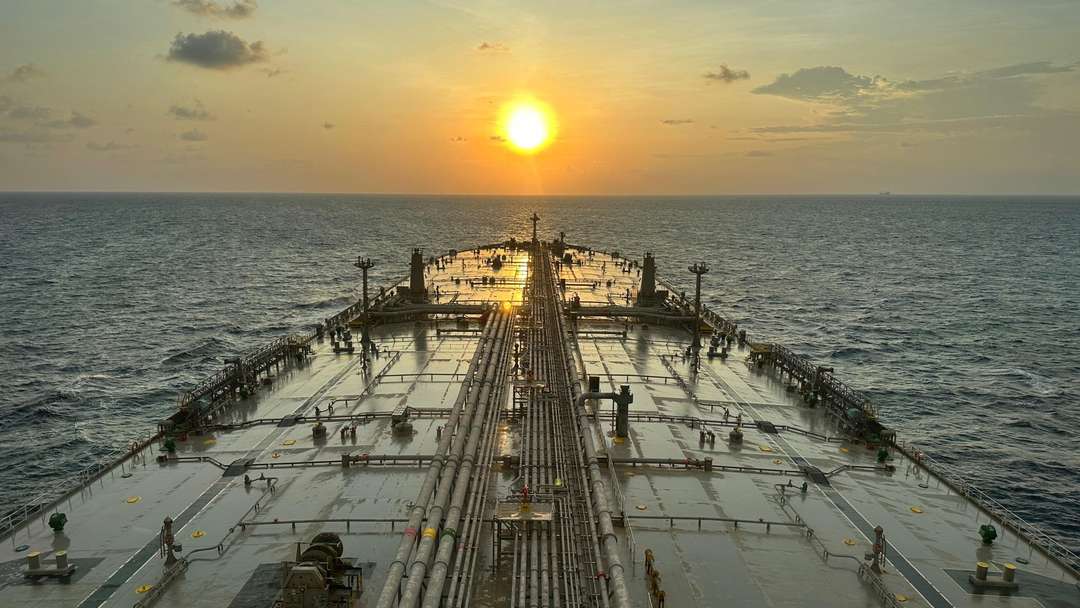
Update: this post is the latest in our coverage of the GEM NO. 2 incident off the UAE coast, following our posts of 24 and 26 October 2026 on the same incident.
On 30 October 2026, the UAE's official news agency WAM reported that the oil leak from the tanker GEM NO. 2 in UAE territorial waters had been stopped at its source, with field teams detecting no new leakage. The remaining slick was concentrated off Umm Al Quwain, reaching partly towards Ras Al Khaimah, Ajman and Sharjah, and pollution levels had declined significantly. But "stopped" is only the first word of this story: stopping a leak, recovering oil from the sea, cleaning the coast and repairing the damage are four different jobs, and only the first is done.
Specialist teams are still working on the tanker — repairing damaged sections, restoring some operating systems and checking the structure to decide the safest way to handle it, according to the Ministry of Energy and Infrastructure, working with the Ministry of Climate Change and Environment and the National Emergency Crisis and Disaster Management Authority. Shipping sources told Reuters the vessel was struck by a projectile on 9 October, causing a fire that was later put out; the UAE authorities have not officially named the cause, and this article does not guess at it.
An oil slick is easier to picture than to clean up. What a slick is, and how it spreads, is explained in our 24 October post on this spill. What it harms depends on the oil: lighter oils spread fast but evaporate and break down sooner, while heavier oils persist, coat and smother. In general, a slick can coat seabirds' feathers and animals' fur so they lose warmth and buoyancy, block sunlight from plants below, and smother mangroves, seagrass and small creatures in the sand when it washes ashore. These are the risks responders work against, not a confirmed inventory of damage: the full environmental picture is still being assessed.
This spill was watched from space in two different ways, and the difference matters. Sentinel-2 satellites carry optical cameras that need daylight and clear skies; their images dated 24 October showed dark layers of oil widening towards Umm Al Quwain, as Dawn reported on 27 October. Sentinel-1 satellites carry radar, called Synthetic Aperture Radar or SAR, which works at night and through cloud; how a slick shows as a dark patch is explained in our 24 October post. But calm water and natural films can make dark patches too — "look-alikes" — so a satellite image is a clue guiding boats and aircraft, not proof on its own. Neither kind of satellite can measure the full damage below the surface or onshore; that takes field surveys, water samples and shoreline inspection.
Oil spill response, the professional name for this work, has four stages. First, stop the leak at its source — the tanker work above. Second, recover oil from the sea: mechanical oil recovery means floating containment booms, long floating barriers that corral oil for collection, and skimmers, devices that lift oil off the surface into storage. Chemical dispersants may also be used: chemicals that break oil into tiny droplets which mix into the water, where natural processes break them down further. Dispersants do not make oil disappear, which is why the environment ministry says they are used only under international standards and approved guidelines. Third, clean the coast: survey each affected beach and remove what the sea brings in. Fourth, environmental remediation: the longer work of assessing affected habitats and helping them recover.
The beach closures tell their own story. More than 35 beaches and coastal areas across Umm Al Quwain, Ras Al Khaimah and Sharjah have been closed or had access restricted, Gulf News reported. All beaches and coastal areas in Umm Al Quwain are closed, all public beaches in Ras Al Khaimah are closed until further notice, and Al Hamriyah Beach in Sharjah is closed as a precaution. No reopening dates have been announced for Umm Al Quwain or Ras Al Khaimah. The environment ministry stressed that a closed beach does not necessarily mean a polluted beach: closures also keep people clear while surveys and clean-up run. Dubai's beaches were not included in the closures.
Two official reassurances deserve to be quoted precisely, because each covers something different. The Ministry of Climate Change and Environment confirmed that fish and food products in local markets are safe and fit for human consumption — that covers products on sale, while assessment of coastal waters continues. Separately, Etihad Water and Electricity confirmed that drinking water supplies remain safe: it monitors seawater at intake points, tests water through production and distribution, and runs extra checks before water enters the network, without disrupting supplies. In an emergency, plain reassurance matters as much as the clean-up, because rumour spreads faster than oil.
For people on that coast, a spill is not a news story but a pause in normal life — beaches closed, bookings uncertain, small coastal businesses absorbing the uncertainty first, with no second coastline to move to.
Why should a reader in Karachi care? Not because Karachi faces the same incident — it does not — but because Pakistan's coast is a working coast. Karachi's ports handle the country's seaborne trade, oil moves through its terminals, fishing communities work its waters, and the Indus delta's mangroves shelter young fish. That is why oil-spill preparedness, port safety, marine environmental protection and public awareness matter here: booms and skimmers must be ready before a spill, not ordered after one; port crews and coastal communities need to know what to do in the first hours; and ordinary readers need to tell an official update from a viral clip. A coastline is not scenery behind a business; it is the business itself.
At AstolixGen, a small Karachi-based technology and educational initiative, we follow this field to explain it, not to claim a role in it. We are not involved in the UAE response, and we claim no operational, scientific or regulatory capability there. Our contribution is education: helping students, teachers and readers understand how the sea, satellites and spill response actually work, so the next official update is easier to follow.
The honest caveat is that a stopped leak is not a finished story. Oil invisible on the surface can still sit in sand, mangrove roots and quiet corners of the shore, and a full picture of environmental damage takes longer than clearing the visible slick. Closures may lift before every question is answered, so official updates, not social media clips, should decide when a family returns to the water. The deeper lesson is older than this spill: prevention is cheaper and kinder than any clean-up. Safer ships, honest reporting and faster detection from space will protect more coastline than all the barriers and dispersants deployed after oil is already in the sea.