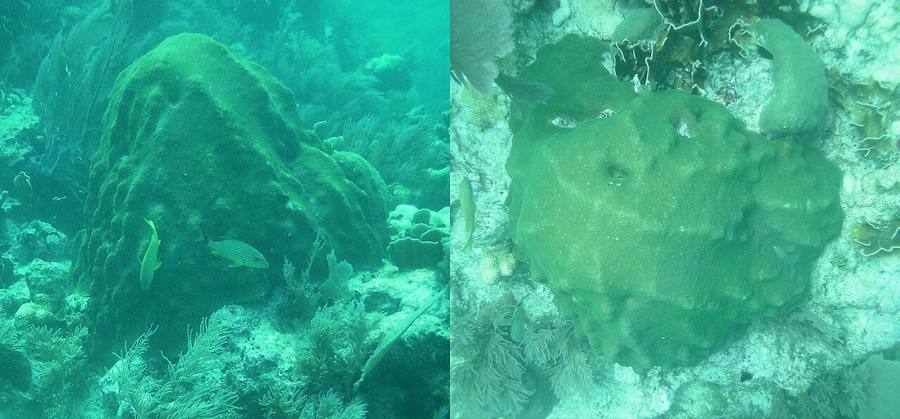
There is a line in the ocean you cannot see, and scientists now say we have crossed it. In 2025, researchers formally assessed ocean acidification — the slow shift in seawater chemistry driven by the carbon dioxide humans release — as outside its planetary boundary, the safe operating space for marine life. A study published the same year in Global Change Biology put a date on it: the global ocean crossed that boundary in 2020. This is not a new regulation, and it is not a doomsday verdict. It is a scientific diagnosis, and it reframes a quiet chemical change as a present-day risk rather than a future worry.
1. What ocean acidification actually is
The chemistry fits in one sentence: the ocean absorbs roughly a quarter to a third of the carbon dioxide humans release. When that gas dissolves in seawater it forms carbonic acid, which breaks apart into hydrogen ions and bicarbonate ions. More hydrogen ions means lower pH — more acidic water — and fewer carbonate ions left over. Carbonate is the building block corals, oysters, mussels, clams, sea urchins and tiny swimming snails called pteropods use for shells and skeletons. NOAA puts the ocean's average pH at around 8.1: still alkaline, not acidic in the everyday sense, but moving the wrong way.
2. Why a tenth of a pH unit is a big deal
Since the industrial revolution began, the pH of surface ocean waters has fallen by about 0.1 units. That sounds trivial until you remember the pH scale is logarithmic, like the Richter scale for earthquakes: a 0.1 drop means roughly 30 percent more acidity. Under business-as-usual emissions, NOAA notes, surface waters could reach pH around 7.8 by the end of this century — a level not seen since the middle Miocene, 14 to 17 million years ago, when the Earth was several degrees warmer. The ocean is not turning into acid. It is losing the chemical balance that shell-building life evolved in.
3. What a 'planetary boundary' means — and what it does not
The planetary boundaries framework, first set out in 2009, defines nine Earth systems that keep the planet stable, each with a 'safe operating space'. Crossing a boundary does not mean a switch has flipped or a collapse is certain. As co-author Liqing Jiang of the University of Maryland explains, it means we have moved out of that safe space into conditions where the risk of widespread, potentially unacceptable change rises sharply. The assessment is a diagnosis of risk, not a law, a treaty, or a prediction of one tipping point.
4. What the new study actually measured
The 2025 study, led from Plymouth Marine Laboratory with NOAA's Pacific Marine Environmental Laboratory and others, analysed ocean carbon observations, models and biological assessments. Its headline measure is aragonite saturation state: how easily aragonite, the calcium carbonate shell-builders use, stays solid. The team found acidification has significantly compromised 40 percent of the global surface ocean and 60 percent of the subsurface ocean down to 200 metres, where aragonite saturation has fallen by a fifth since pre-industrial times. The largest surface changes are in polar regions, including the Arctic; the largest deeper changes are in sub-polar regions and along the west coast of North America. The habitat arithmetic is stark: some tropical and subtropical coral reefs have lost an estimated 43 percent of their suitable habitat, polar pteropods up to 61 percent, and coastal shellfish species 13 percent of their global coastline habitat.
5. The hidden half: why depth matters
The most important changes are happening out of sight. Two hundred metres down, higher carbon dioxide and weaker chemical buffering make pH fall and carbonate decline faster than at the surface. As the Stockholm Resilience Centre notes, the depth at which calcium carbonate begins to dissolve — the saturation horizon — is rising toward the surface, threatening cold-water corals. The researchers also propose tightening the boundary itself, from a 20 percent fall in aragonite saturation to 10 percent, arguing serious habitat loss already happens well before the old threshold. On that stricter measure, the whole surface ocean passed the line around 2000. That proposal is a recommendation, not an adopted standard.
6. It is already showing up in catches, not just chemistry
This is not only a laboratory story. A NOAA study from February 2025 found the first correlation between acidification and a wild stock's decline: in the Bering Sea, rising acidity explained about 21 percent of the Bristol Bay red king crab decline since 1980, and roughly 45 percent since 2000. The authors stress it is a correlation — ecosystems are complex, and acidity is one pressure among warming and sea-ice change. The fishery closed for two years, 2022 to 2024, and reopened in October 2023 with a much smaller quota. In the late 2000s, changing chemistry cost Pacific Northwest shellfish hatcheries an estimated $110 million, until managers began buffering their tank water. NOAA research in 2016 linked carbon dioxide to dissolving shells of young sea snails off the U.S. West Coast.
7. What would turn it back
There is no quick chemical fix for an ocean. The researchers' answer is the same as for climate change itself: cut carbon dioxide emissions. Jiang notes global per-capita emissions of about five tonnes a year, and says transitioning away from fossil fuels is the primary way to slow the decline of ocean pH. Monitoring matters too — the team calls for more attention to the subsurface ocean and for studying warming, low oxygen and acidity together rather than in isolation, since sea life faces them all at once. Cutting emissions does not restore the old chemistry overnight; the ocean's chemistry moves on timescales of decades to centuries. But every tonne of carbon dioxide not emitted is acidity that never arrives.
For an ordinary reader, the useful response is attention, not alarm. The ocean is still alkaline, still full of life, and still absorbing a large share of our emissions — that service is exactly what is changing its chemistry. Watch the next Planetary Health Check, whether Arctic waters keep acidifying fastest, and whether fisheries science keeps finding acidity in the catch data. For the wider picture, see AstolixGen's Marine Pollution guide and our free learning book Maritime Climate Awareness. At AstolixGen, a small Karachi-based technology and educational initiative, we follow this research to explain it, not to claim a role in it. We are not a monitoring agency or regulator. Our contribution is education: helping readers judge the next headline about the sea on its evidence.