← All 51 titles
Book 51 of 51 · Free
Maritime Climate Awareness: Safety, Precautions and Life at Sea
10,467 words · 12 chapters · illustrated
By AstolixGen
Book 51 of 51 · Free
10,467 words · 12 chapters · illustrated
By AstolixGen
Book 51 — AstolixGen Learning Series (Detailed Edition) For seafarers, maritime students, and cruise & merchant crew
The sea is changing. Oceans are warmer than they were when many of today's senior officers first went to sea. Storms are stronger, ports flood more often, and the rules that govern ships are changing fast to protect the climate and the ocean. At the same time, the daily work of a seafarer has not changed in one important way: safety still depends on ordinary people doing ordinary things correctly, every watch, every day. This book connects those two worlds. It explains, in simple and direct language, what climate change means for life on board, how ships affect the ocean and the air, and what every crew member — on a container ship, a tanker, a bulk carrier, or a cruise ship carrying thousands of guests — can do to work safely and protect the sea that feeds all of our families.
This book is written for working crew and for cadets preparing to join their first ship. It is practical, not academic. You will find checklists, clear rules, and real habits used on good ships. You do not need to be an engineer or an environmental scientist to follow it. You need only the mindset every good seafarer already has: look ahead, prepare early, follow the procedure, speak up when something is wrong, and never let pressure — from a schedule, a company, or anyone else — push you into unsafe or dirty work. If you finish this book with that mindset strengthened, it has done its job.
Learning objectives: - Understand, in plain words, how the climate and the ocean are changing, and what those changes mean for your daily work on watch - Explain how ships affect the air and the sea, and what the main MARPOL rules ask of you - Prevent oil spills before they start, and know your first duties if one happens - Manage garbage, sewage, chemicals, and ballast water correctly - Apply the safety foundations used on every good ship: PPE, permits to work, toolbox meetings, and near-miss reporting - Respond correctly to fire, flooding, abandon ship, and man overboard - Prepare your ship and yourself for heavy weather, heat, and cold - Protect your own health, rest, and mental wellbeing during long contracts - Carry out passenger safety duties and manage the environmental footprint on a cruise ship - Save fuel and energy on every watch through green seamanship - Act with honesty and courage in the first hour of any incident This book teaches awareness and good practice; your company's SMS and the official regulations always govern your work.
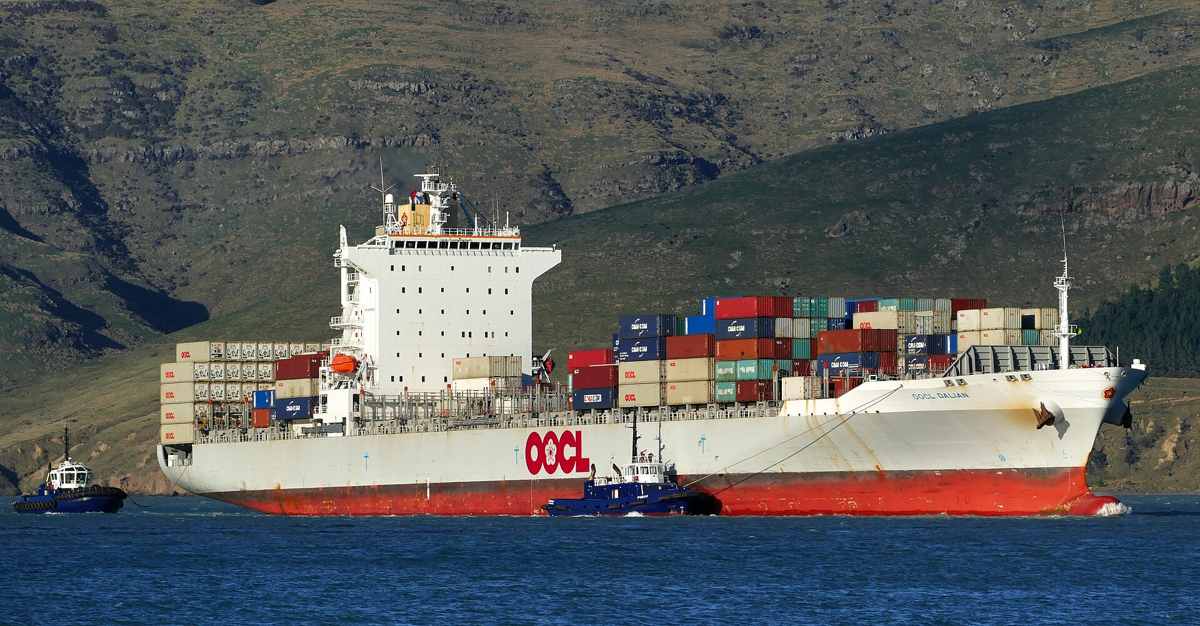
A container ship at sea. The world's merchant fleet moves about 90% of world trade — and feels every change in the ocean climate first.
The ocean absorbs most of the extra heat that human activity adds to the planet's atmosphere. Year by year, sea surface temperatures are rising in most parts of the world. For a seafarer, this is not an abstract number on a chart. Warm water changes the weather you sail through. It feeds energy into tropical storms. It changes where fish live, which changes where fishing fleets work and where traffic concentrates. Warm water also holds less oxygen, and many sea creatures struggle when their home water warms beyond what they are built for.
On watch, warmer seas show up in practical ways. Air conditioning and refrigeration plants work harder in tropical heat. Engine cooling systems have less margin when seawater intake temperatures climb. Some ports that were comfortably workable a generation ago now have more days of dangerous heat for deck crews. None of this should frighten you — but all of it should make you pay attention. The sea you sail today is not exactly the sea described in old seamanship books.
As ocean water warms, it expands. At the same time, ice on land — glaciers and the great ice sheets — is melting and adding water to the sea. Together, these two effects raise the sea level, slowly but steadily. A few centimetres may not sound like much, but ports, locks, and coastal cities are built to fine margins. Higher sea level means storm surges reach further inland, harbour flooding happens more often, and some low-lying terminals and island nations face a serious long-term threat.
For crew, sea-level rise appears as small operational changes that add up: more frequent port flooding, berthing windows affected by higher tides, stronger demands on mooring lines when water levels and currents behave differently than the old tide tables suggest, and coastal infrastructure under repair more often. Treat tide and weather information as living data. Do not assume that because a port was easy ten years ago, it will behave the same way today.
Warmer ocean water is fuel for tropical cyclones — hurricanes, typhoons, and cyclones are the same kind of storm with different regional names. Scientists observe that the strongest storms are becoming more intense, with heavier rain and higher winds, and that storms can strengthen very quickly, sometimes in less than a day. A storm that strengthens fast gives a ship less time to run from it. This is why modern weather routeing, early course changes, and honest communication between the bridge and the company matter more than ever.
Storms outside the tropics are changing too. Winter storms in the North Atlantic and North Pacific can be severe, and heavy rain events are increasing in many coastal regions, which affects rivers, harbour approaches, and visibility. Chapter 7 of this book covers heavy-weather preparation in detail. The climate point is simple: plan for weather that can be worse, and arrive faster, than the old averages suggest.
The ocean absorbs a large share of the carbon dioxide that humans release into the air. This slows down warming of the atmosphere, but it changes the chemistry of seawater, making it slightly more acidic. This process is called ocean acidification. It harms shell-building creatures — oysters, mussels, some plankton, and coral reefs — because acid water makes it harder for them to build and keep their shells and skeletons. Coral reefs that protect coasts and shelter young fish are under pressure from both warming and acidification at the same time.
Why should a seafarer care? Because the health of the ocean is the health of the industry and of coastal communities everywhere. Many crew members come from coastal families who depend on fishing. When reefs and shellfish beds suffer, those families suffer. Acidification also reminds us of a core lesson of this book: what leaves a ship — through the funnel or over the side — does not disappear. It goes somewhere, and it does something.
Ocean currents and wind patterns are shifting as the planet warms. Some effects are already visible in the shipping world. Arctic sea ice is shrinking, which opens northern routes for more of the year — but Arctic sailing brings its own serious dangers: ice is never fully predictable, charts and rescue services are limited, and a casualty far from help is a grave matter. Elsewhere, changing winds alter the best routeing choices, and shifting currents change arrival times and fuel use. Ports in some regions face more fog, more dust, or more extreme rain at certain seasons.
The professional response is the same as it has always been: use the best current information, keep charts and publications corrected, listen to local pilots and port authorities, and respect the fact that local knowledge may be based on conditions that are themselves changing. Ask questions in new ports. Old hands and local agents often notice changes — in currents, in siltation of channels, in storm patterns — before the books catch up.
Climate awareness is not a separate subject from seamanship. It is seamanship, updated. On your watch it means:
- Take weather information seriously and early — do not wait for conditions to prove the forecast right - Expect heavier rain, stronger gusts, and faster-changing conditions than the seasonal average suggests - Watch your ship's cooling, ventilation, and refrigeration margins in extreme heat - Secure for sea properly, every time — "we have done this route a hundred times" is not a securing plan - Report what you observe: unusual currents, debris fields, marine life strandings, discoloured water, or damage to aids to navigation — your report may be the first warning ashore - Treat every discharge rule as if the coast nearby were your own home coast — for someone on board, it is
The chapters that follow build on this foundation. First we look honestly at how ships themselves affect the climate and the ocean. Then we turn to the practical heart of the book: prevention, safety, health, and the daily habits that keep people alive and the sea clean.
Shipping moves about 90% of world trade by volume. Almost everything in a modern home — fuel, grain, phones, clothes, medicines — spent part of its journey on a ship. Shipping is also, per tonne of cargo moved, one of the most efficient forms of transport. But the fleet is enormous, and most ships burn fossil fuel. The exhaust from ship engines contains carbon dioxide (CO2), the main greenhouse gas driving climate change, along with other substances that affect air quality and health in port cities.
A seafarer does not choose the ship's fuel or design. But crew control how efficiently the ship is operated, how well machinery is maintained, and whether pollution rules are followed or quietly broken. That is real influence, and this chapter explains the rules and ideas behind it in plain words.
When fuel burns in an engine or boiler, several things come out of the funnel:
- Carbon dioxide (CO2): invisible, unavoidable when burning fossil fuel, and the main driver of long-term climate warming. The only ways to cut it are to burn less fuel or use a different fuel. - Sulphur oxides (SOx): from the sulphur in fuel. They harm lungs and form acid rain. This is why fuel sulphur is strictly limited. - Nitrogen oxides (NOx): formed at high combustion temperatures. They contribute to smog and acid deposition. Modern engines are built and tuned to limit them. - Particulate matter: tiny soot particles that damage health, especially in ports and coastal cities. - Black carbon: the dark part of soot. When it settles on Arctic ice and snow, it darkens the surface, which then absorbs more sunlight and melts faster. Black carbon matters most in polar regions. - Underwater noise is not an exhaust product, but it belongs in this honest list: propeller and machinery noise travels far underwater and disturbs whales and other marine life that use sound to navigate, feed, and communicate. Slowing down in sensitive areas reduces noise as well as fuel burn.
MARPOL is the main international convention for preventing pollution from ships. It has six technical annexes. Every seafarer should know what each one covers:
- Annex I — Oil: rules for oil tankers and for oily waste, bilge water, and discharges from all ships. This is the annex behind the Oil Record Book and the 15 ppm discharge standard for treated bilge water. - Annex II — Noxious liquid substances in bulk: chemicals carried in bulk, ranked by how harmful they are, with strict discharge and tank-washing rules. - Annex III — Harmful substances in packaged form: dangerous goods in packages, drums, and containers — marking, labelling, stowage, and documentation. - Annex IV — Sewage: rules for treating and discharging sewage, with stricter limits near land and in special areas. - Annex V — Garbage: rules for all ship garbage. Plastics must never be thrown into the sea, anywhere, ever. - Annex VI — Air pollution: fuel sulphur limits, NOx controls, energy efficiency rules for ships, and greenhouse-gas measures.
You do not need to memorise every number in MARPOL. You need to know which annex covers your task, follow your ship's procedures, and understand that these rules exist because the sea remembers what we put into it.
The International Maritime Organization (IMO) has set the shipping industry on a path to cut greenhouse-gas emissions deeply this century, with a long-term goal of reaching net-zero emissions around the middle of the century. The direction of travel is clear even where the details continue to be negotiated: ships must become more efficient, fuels must become cleaner, and emissions must be measured and reported honestly. New fuels — such as methanol, ammonia, and others — are being introduced, each with its own safety training needs. When your company introduces a new fuel or a new energy-saving device, take the training seriously; the hazards of new fuels are different, not smaller.
Since 1 January 2020, the global limit on sulphur in fuel oil used on board ships is 0.50% — a large cut from the previous limit. In designated Emission Control Areas, the limit is even stricter at 0.10%. Ships comply by burning compliant low-sulphur fuel, or by using an approved exhaust gas cleaning system (a scrubber) that removes sulphur from the exhaust. For crew, the practical points are discipline and honesty: manage fuel changeovers carefully and record them correctly, never be tempted by non-compliant fuel offered cheaply, and remember that port state inspectors check fuel samples and records. A falsified fuel record is treated as seriously as a falsified oil record — and Chapter 11 explains why honesty is a survival skill, not just a rule.
Two measures under MARPOL Annex VI now shape how ships are operated:
- EEXI (Energy Efficiency Existing Ship Index): a one-time technical check of your ship's design efficiency — how much CO2 the ship produces per unit of transport work, based on its built characteristics. If a ship does not meet the required standard, it may need technical changes, such as limiting engine power. For crew, EEXI mostly arrives as a fact of life: your ship may have a maximum power limit you must respect. - CII (Carbon Intensity Indicator): an operational rating, recalculated every year, that grades the ship from A (best) to E (worst) based on how efficiently it actually operated — fuel used versus distance sailed and cargo capacity. CII is where crew behaviour shows up in the numbers: speed discipline, efficient routeing, hull cleanliness, and good maintenance all improve the rating. A poor rating over consecutive years requires a corrective plan. When your master or chief engineer talks about protecting the CII, this is what they mean: the ship's real-world efficiency is being graded, and every watch contributes.
Ships will keep burning fuel for years to come, and world trade depends on them. Climate awareness for a seafarer is not guilt — it is professionalism. Burn less where you safely can. Maintain machinery so it runs clean and efficient. Follow MARPOL as if an inspector and your own children were both watching — because the first is possible and the second, in the long run, is true: the sea state we leave behind is the one the next generation of seafarers, including perhaps your own family, will sail on.
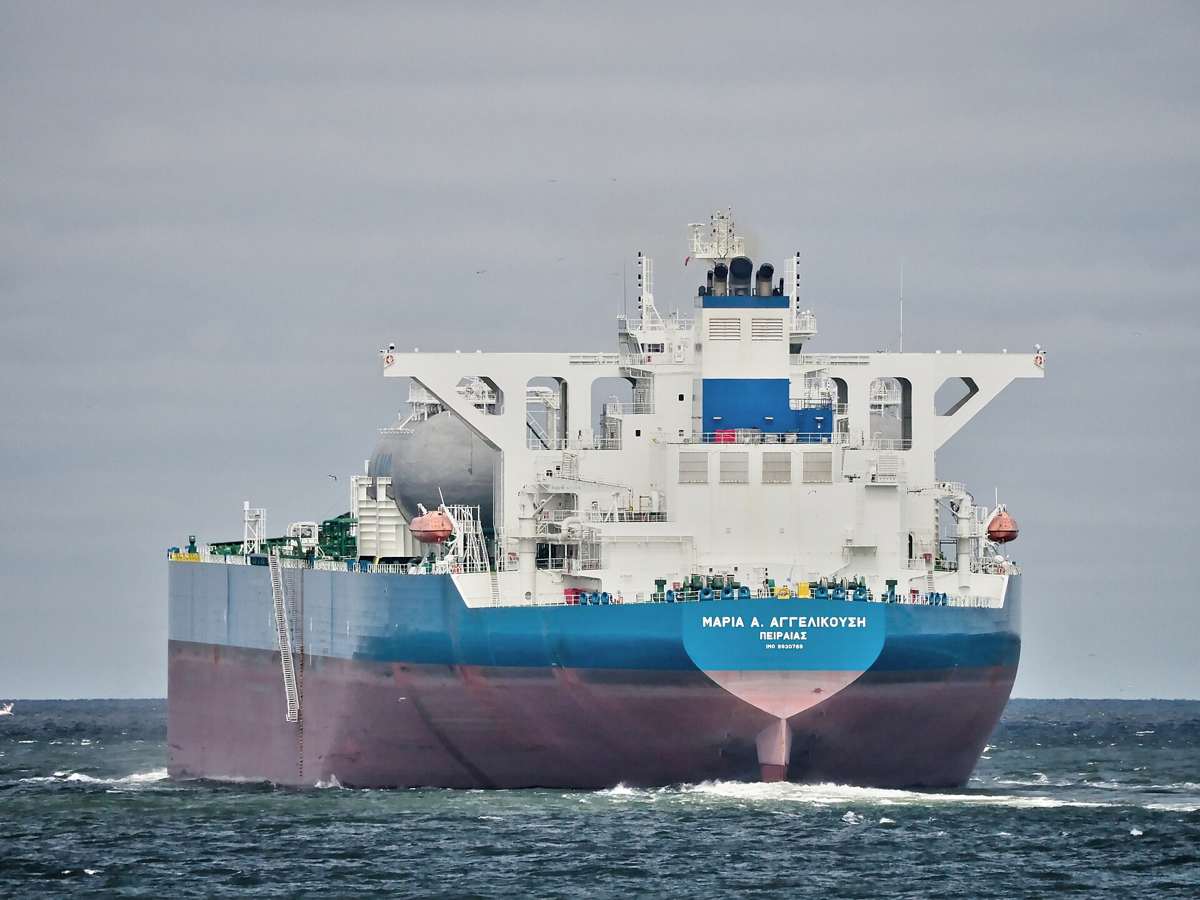
A crude oil tanker. One careless bunkering operation can undo years of safe work — prevention is always cheaper than cleanup.
When people imagine an oil spill, they picture a tanker breaking apart on rocks. Such disasters happen, but they are rare. Most oil that reaches the sea from ships escapes during ordinary, routine work — the kind of work done every week in every port. Spills start during bunkering, when fuel is taken on board. They start during internal transfers, when oil is moved between tanks and a tank is overfilled. They start from bilges, when oily water is mishandled. They start from leaking hydraulic lines, failed seals, cracked pipes, and hoses that were not inspected. They start, very often, when someone was rushed, tired, distracted, or afraid to say "stop."
This is actually good news. It means most spills are preventable by ordinary discipline. You do not need new technology to prevent the common spill. You need a checklist followed properly, two people checking instead of one person assuming, clear communication between the deck and the pump side, and the courage to stop the job the moment something looks wrong.
Bunkering concentrates many risks into a few hours: a large volume of oil moving under pressure, a connection between ship and shore or barge that can leak, tank levels rising, and often commercial pressure to finish quickly. Treat every bunkering operation with the same seriousness, whether it is your first or your five hundredth.
A sound bunkering discipline includes:
- A written plan and checklist agreed before the operation starts — tank sequence, quantities, rates, and emergency stop method - A pre-operation meeting or clear briefing between all involved: ship's crew, barge or terminal staff, with communication channels tested - Tanks sounded or gauged before starting, and checked regularly during the operation — never rely on one reading or one person - All scuppers plugged and drip trays in place, with absorbent material and the spill kit ready at the manifold - The manifold connection inspected, blank flanges removed carefully, and hoses checked for damage and correct pressure rating - A dedicated watch at the manifold throughout the operation — bunkering is never an unattended job - Clear agreement on signals and on who can order an emergency stop — anyone who sees a leak must be able to trigger it - Tank levels monitored against the plan, with topping-off done at reduced rate and with extra care - No other risky work at the same time that divides attention or creates ignition sources nearby
Most of these steps cost nothing but attention. Skipping them saves minutes and risks careers, coastlines, and the company's survival. There is no version of "fast" that is worth an oil spill.
Every ship carries a SOPEP — the Shipboard Oil Pollution Emergency Plan, required under MARPOL Annex I. It tells the crew what to do when oil escapes: who to inform, what equipment is carried and where, how to contain and clean up a deck spill, and how to report to coastal authorities. A sister document, the SMPEP, covers marine pollution by noxious liquid substances on ships that carry them.
Do not wait for a spill to open this plan for the first time. On joining a ship, learn:
- Where the SOPEP/SMPEP is kept and what your personal duties in it are - Where the spill response equipment is stored: absorbent pads and booms, dispersant if carried and approved, pumps, empty drums, PPE - The alarm and the reporting chain: who informs the master, who makes external reports - The location of emergency shutdowns for pumps and valves relevant to your department
Drills that practise a deck spill — even a small simulated one — turn the plan from paper into habit. If your ship's drills feel like theatre, say so respectfully and suggest a realistic scenario. Good officers welcome the idea; a drill that surprises nobody teaches nobody.
Stop-work authority means exactly what it says: any crew member, of any rank, can and must stop a job that is becoming unsafe or is about to cause pollution — without fear of punishment for doing so. A junior rating who stops a transfer because he sees oil at a flange has saved the ship, not embarrassed it. Companies with a healthy safety culture say this openly and back it with action when it happens.
Use it. If you are the senior person, honour it publicly when someone junior uses it. The day a crew member is mocked or punished for stopping work is the day the crew stops reporting dangers — and from that day, the ship is sailing blind.
When oil does escape, the law and the plan both demand quick, honest reporting: to the master immediately, and by the master to the nearest coastal state and the company, as MARPOL requires. Early reporting is not an admission of disaster — it is how help arrives early, while a small spill is still small. Delayed or false reporting turns an accident into a crime. Chapter 11 returns to this theme, because the first hour of an incident decides more than any other.
Every ship has a Garbage Management Plan that says what happens to each kind of waste on board, and a Garbage Record Book in which discharges and disposals are recorded. These are not port-state paperwork games. They are the ship's proof that its waste went where it should: to reception facilities ashore, to an approved incinerator, or — for the few categories allowed — discharged at sea far from land under strict conditions.
Five garbage rules cover most of daily life on board:
- Rule 1: Plastic never goes into the sea. Not a bag, not a bottle, not a piece of packaging, not fishing gear. Plastic persists for generations and kills marine life. There is no distance from land that makes plastic discharge legal. - Rule 2: Segregate at the bin. Garbage mixed together cannot be managed properly. Food waste, plastics, metal, glass, paper, cooking oil, and operational waste each have their own route — follow your ship's colour codes and labels. - Rule 3: Food waste has distance rules. Discharge of food waste at sea is only allowed far from land, and under tighter conditions in special areas; ground food waste has its own conditions. When in doubt, keep it on board for shore disposal. - Rule 4: Cooking oil is not poured away. Used cooking oil is collected and landed ashore as garbage. It must never be discharged at sea or poured into bilges or drains that lead overboard. - Rule 5: Record honestly. Every discharge or landing goes in the Garbage Record Book, signed and accurate: what, how much, where, when. A record book that does not match reality is a serious legal problem for the master and the company.
Sewage — black water from toilets — is covered by MARPOL Annex IV. Ships treat sewage in an approved treatment plant, or discharge it only under strict conditions of distance from land and rate of discharge while underway; in some areas and ports, discharge is not allowed at all and holding tanks must be used until shore facilities are available. Learn your ship's system: where the holding tank is, how the treatment plant is operated, and what the local port rules are before arrival.
Greywater — from showers, sinks, laundry, and galleys — is not covered by MARPOL in most of the world, but it still carries detergents, food residues, and microplastics into the sea, and some countries and ports regulate it strictly. Good practice is simple: minimise what goes down the drain, never pour chemicals or oil into sinks, and follow port rules where they exist. On cruise ships, greywater volumes are large, and Chapter 9 covers the hotel department's role in managing them.
Chemical tankers carry noxious liquid substances in bulk under MARPOL Annex II. These substances are categorised by how dangerous they are to marine life and human health, and the rules control tank washing, residue discharge, and stripping in detail. If you serve on a chemical tanker, your cargo-specific training governs your work — this book adds only the principle: residues and washings are never "just water." They are controlled substances until the procedures say otherwise, and the Cargo Record Book must tell the true story of every operation.
On all ships, packaged dangerous goods fall under Annex III and the IMDG Code: correct labelling, stowage, segregation of incompatible goods, and accurate documentation. A leaking drum reported early is a manageable problem; a leaking drum discovered late in a hold full of mixed cargo is an emergency.
Ships take on ballast water in one part of the world to stay stable, and discharge it in another. That water carries invisible passengers: larvae, eggs, bacteria, and small organisms. Released in a new home where they have no natural enemies, some become invasive species that damage fisheries, clog port infrastructure, foul aquaculture, and change ecosystems permanently. Ports around the world have been transformed this way — the damage is real and mostly irreversible.
The Ballast Water Management Convention answers this threat. Ships must manage ballast water to a strict standard, in most cases through an approved ballast water treatment system that kills or removes organisms before discharge, and must keep a Ballast Water Record Book and follow an approved management plan. For crew, the essentials are: operate the treatment system exactly as trained, never bypass it to save time, keep records accurate, manage ballast exchange only where and how the plan allows, and watch for sediment build-up in tanks, because sediment shelters organisms that treatment may miss. Ballast is not "just seawater." Treat it as what it is: a responsibility carried between ecosystems.
Personal protective equipment — helmet, safety shoes, gloves, eye and ear protection, coveralls, and task-specific gear such as harnesses, respirators, and chemical suits — is the last line of defence, not the first. The first lines are planning, isolation, ventilation, and good equipment. But when all else fails, PPE is what stands between you and the injury. Wear it correctly, maintain it, and replace it when damaged. Ill-fitting or skipped PPE is a quiet habit that spreads: when one person works without gloves or a helmet, others copy. Be the person others copy for the right reason.
Before any significant job, the team gathers for a toolbox meeting: what is the task, what can hurt us, what are the controls, who does what, and what do we do if something changes. A good toolbox meeting is short, honest, and two-way — the most junior person may spot the hazard the plan missed. If your meetings are a signature on a form and nothing more, improve them: ask one real question ("What is the worst thing that could happen in this job, and what stops it?") and listen to the answers.
Certain jobs are dangerous enough to need a formal permit to work — a written check that conditions are safe before the job starts, and that the job stops when conditions change. The classic permits include:
- Hot work: welding, cutting, grinding — anywhere sparks or flame could ignite cargo, fuel, or paint. Fire watch, gas testing, and removal of combustibles come first. - Enclosed space entry: tanks, voids, chain lockers, and any space where the air cannot be trusted. - Working aloft and overside: falls from height and falls into the sea are prevented by harnesses, proper staging, and rescue readiness. - Electrical work: isolation, lock-out and tag-out, so no one can re-energise equipment while hands are on it. - Lifting operations, diving operations, and work on pressurised systems each carry their own controls on well-run ships.
A permit is not bureaucracy. It is the memory of every accident that taught the industry why the check exists. Never start permit work without the permit, never let a permit outlive its conditions, and never sign for a check you did not actually make.
Enclosed spaces kill more seafarers than storms do. Tanks and voids can hold air with too little oxygen, or with toxic or flammable gases, and the danger is invisible: a space that looks empty can render a person unconscious in a breath or two. Worse, a large share of enclosed-space deaths are would-be rescuers — shipmates who rushed in to save a collapsed colleague and collapsed beside them.
The rules that save lives here are absolute:
- No entry without a permit, a tested atmosphere, ventilation, and a plan — no exceptions for "just one quick look" - A trained attendant stays at the entrance, in communication, with rescue equipment ready - The rescue rule: never enter to rescue without breathing apparatus and a rescue plan. Raise the alarm, use the retrieval equipment, and let the equipped rescue team do its work. Grief makes heroes rush; discipline brings both men home. - Atmosphere testing is done by a competent person with a calibrated meter, before entry and during the work as required
If you remember one page of this book, remember this one. The enclosed space does not care about your rank, your experience, or your good intentions.
A near miss is an accident that almost happened: the shackle that fell and missed, the flange that wept and was caught, the mooring line that parted with no one in the snap-back zone. Every near miss is a free lesson. Ships that report and study near misses learn cheaply; ships that hide them pay tuition later, in injuries. Report near misses without fear, and when you lead, thank the reporter. The goal is a just culture: honest mistakes and honest reports are met with learning, while reckless behaviour and falsified records are met with consequences. That balance — fair, known, and consistent — is what makes crew speak up, and speaking up is the foundation everything else in this book stands on.
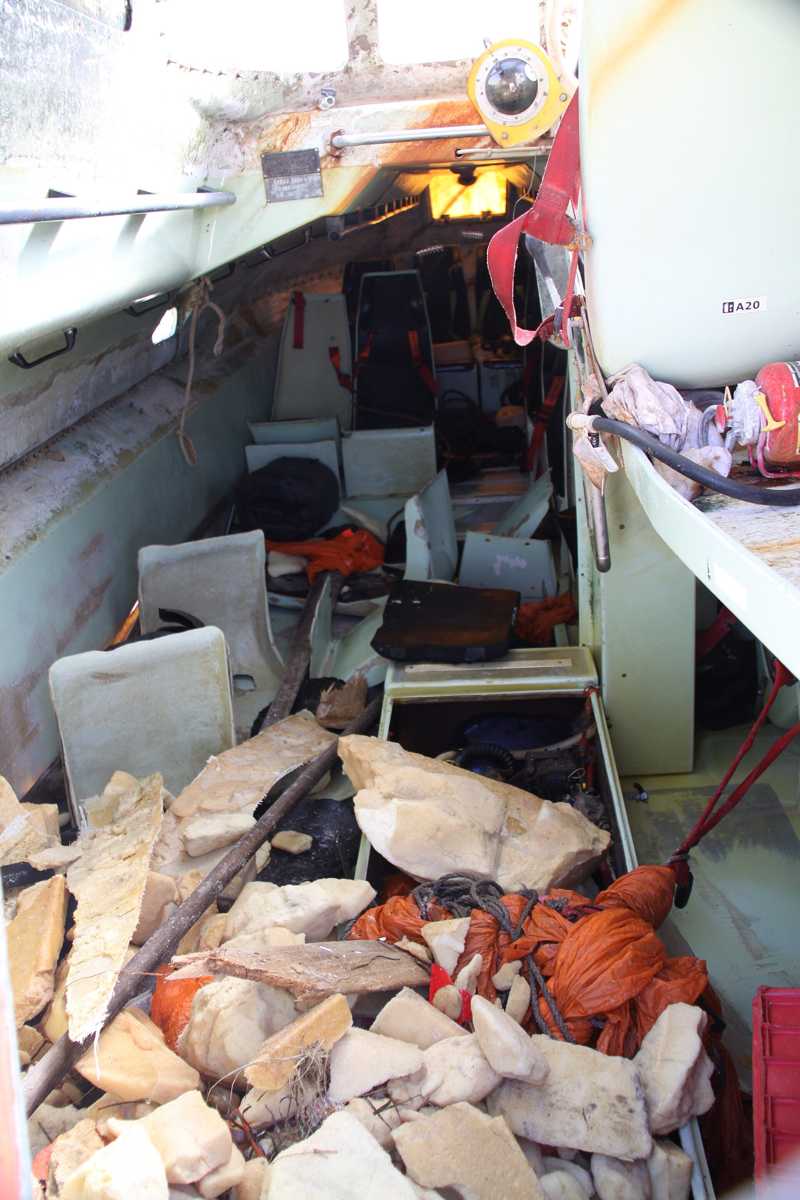
Inside a totally enclosed lifeboat. Know your boat before you need it — the seats, the belts, the controls and the supplies. And drill like it is real: in an emergency there is no time to learn.
The SOLAS convention sets the safety standards for ships: fire protection, life-saving appliances, alarms, and drills. On board, SOLAS becomes personal through the muster list — the document that assigns every crew member a station and a duty for each emergency: fire party, lifeboat preparation, passenger assistance, damage control, and more. When you join a ship, your first duties are to find your muster station, learn your duties for each signal, and know the escape routes from your cabin and your workplace — including the secondary route, in case the first is blocked by smoke.
Learn the alarms by sound until you could name them half-asleep. Know where your lifejacket is, how to don it correctly, and where the immersion suits for your station are stored. These are not formalities. They are the difference between a crew that functions in the first confused minutes of an emergency and a crowd that does not.
Fire is the emergency seafarers fear most, because a ship is a steel box full of fuel at sea, far from any fire brigade. Fire classes describe what is burning, and the class decides the correct extinguishing agent:
- Class A: ordinary solids — wood, paper, cloth, bedding. Water or foam works well. - Class B: flammable liquids — fuel, oil, paint, solvents. Foam, dry powder, or CO2; never a straight jet of water, which spreads burning liquid. - Class C: gases — such as LPG leaks. Dry powder, and shut off the gas supply if safe. - Class D: metals — rare on most ships, needs special agents. - Class E (electrical): fires involving live electrical equipment. Isolate the power first; use CO2 or dry powder, never water on live equipment. - Class F/K: cooking oils and fats in galleys. Wet chemical extinguishers are made for this; a lid or fire blanket for a small pan — never water, which turns burning oil into an explosion of flame.
Your first response to discovering a fire is always the same sequence: raise the alarm, inform the bridge, and — only if the fire is small and you are trained and have an escape route behind you — attack it with the correct extinguisher. Close doors and dampers to starve the fire of air as you withdraw. Know the fixed systems in your areas: CO2 or foam flooding for machinery spaces, sprinklers and water mist in accommodation and cruise ship public spaces. CO2 total flooding saves ships and kills anyone inside the space — its pre-discharge alarm means evacuate now, and headcounts before release are a sacred duty.
Watertight doors, hatches, and valves divide the ship into compartments so that one flooded space does not become a lost ship. This protection only works if closures are used correctly: doors kept shut at sea as the ship's policy and conditions require, never wedged or hooked open for convenience, and closed on alarm without debate. If you find a watertight door that does not close or seal properly, report it the same day — a defective door is defective courage for the whole ship.
In a flooding emergency your duties come from the muster list: sound boundaries, report levels and rates honestly, operate damage-control equipment as directed, and never enter a flooding space against orders. Calm, accurate reports from the scene are what allow the command team to save the ship.
Only the master orders abandon ship, and the general alarm plus that order means: warm clothing, lifejacket, muster, follow your boat party. Free-fall and davit-launched lifeboats, rescue boats, and inflatable liferafts are your survival craft. In drills, practise as if it were real: correct seating and seatbelts, engine start, release gear operation, and clear communication. Check that lifeboat provisions, water, and pyrotechnics are in date when it is your duty to check them — and report honestly when they are not.
At sea, survival is a team skill: stay together, keep the boat dry and organised, ration water sensibly, protect against exposure, and maintain morale. Panic and exposure kill faster than hunger. The boat's coxswain is in command; everyone supports that command.
- EPIRB: a beacon that, when activated, transmits the ship's identity and position via satellite so rescue services know who you are and where to come. Float-free EPIRBs activate automatically if the ship sinks. - SART: a radar transponder carried in survival craft. When a rescuer's radar sweeps it, it paints a clear line of dots on their radar screen, guiding them to you. - Pyrotechnics: rocket parachute flares (seen from far away), hand flares (for final guidance), and orange smoke signals (for daylight and aircraft). Use them when rescuers can see them — signals spent too early are signals wasted. - GMDSS radios and DSC alerts connect the ship to rescue coordination centres and nearby vessels. If your duties include them, keep the watch discipline they demand.
Shout, throw a lifebuoy, point and keep pointing, raise the alarm — these first seconds decide the outcome. The bridge manoeuvres the ship back to the person (the Williamson turn is the classic recovery manoeuvre), the rescue boat prepares, and lookouts never lose sight of the casualty if it can be helped. In cold water, minutes matter even more, and a recovered person must be handled gently and treated for cold shock and hypothermia. Prevention stands on railings respected, overside work permitted and harnessed, and decks kept lit and tidy at night. No task on deck is worth a life over the side.
Modern forecasts combine satellite data, ocean models, and ship reports, and they are better than ever — but they are guidance, not guarantees. Learn to read the products your ship uses: synoptic charts, wave and swell forecasts, tropical cyclone warnings, NAVTEX and SafetyNET messages, and routeing service advice. Understand the difference between wind, gust, sea, and swell, and remember that a cargo of containers, a high-sided cruise ship, and a loaded tanker all answer the same sea differently. The climate lesson of Chapter 1 applies directly: storms can deepen faster than older experience suggests, so respect forecast trends, not just forecast positions.
Heavy weather is survived in the hours before it arrives. Securing for sea means:
- Lashings on deck cargo checked and tightened; container lashings and hatches verified - Loose gear on deck, in workshops, stores, and galleys secured — a flying object in a seaway is a weapon - Free surface in tanks minimised where the stability plan requires; ballast adjusted as the master's plan directs - Watertight doors, ports, and openings in the correct condition; bilges sounded and alarms tested - Lifeboats, liferafts, and emergency equipment checked ready — heavy weather is when they are most likely to be needed and hardest to reach - Crew warned, rest planned, handrails and safety lines rigged, and non-essential deck work stopped before conditions make it dangerous
On passage, the master's tools are course, speed, and time: heave to, alter course to ease the motion, or run before the sea — decisions made from the ship's behaviour, the forecast, and honest reports from all departments. Engine room and deck must tell the bridge the truth about vibration, slamming, water ingress, and cargo movement. Bad news delivered early is seamanship; bad news delivered late is an inquiry.
As oceans and ports warm, heat is a growing occupational danger — in engine rooms, on sun-exposed decks, and in ports where work continues through extreme afternoons. Heat stress creeps: headache, dizziness, nausea, confusion, and in the worst case heat stroke, which can kill. Protect yourself and your shipmates:
- Drink water regularly, before you feel very thirsty; use electrolytes on long, sweaty work - Work-rest cycles in extreme heat, with shade and cooler rest areas used without shame - Watch each other: confusion, stopped sweating, or collapse in a shipmate is a medical emergency — cool them and call for help fast - Plan the heaviest deck work for cooler hours whenever the operation allows - Acclimatise: new joiners and crew from cold climates need days to adapt to tropical heat
Cold injures as surely as heat: hypothermia from immersion or exposure, frostbite on exposed skin in polar and winter trades, and slippery decks from ice. Dress in layers, stay dry, rotate exposed work, and treat immersion suits and thermal protective aids as life equipment, not stores. Lightning demands simple discipline: during electrical storms, avoid exposed high work, stay clear of antennas and metal structures where policy requires, and let the bridge manage communications equipment duties. Heavy rain brings its own hazards: poor visibility, flooded deck areas, and contaminated runoff — keep scuppers and drainage managed so oily deck water cannot escape untreated.
Climate change is making port operations less predictable: terminals close for storms and flooding, rivers rise and fall beyond their old patterns, heat rules stop crane work, and congestion follows every closure. All of this creates the most dangerous weather-related pressure of all — commercial pressure. A delayed ship tempts everyone along the chain to cut corners: to sail into weather that should be waited out, to rush cargo and bunkering work, to sail with a defect that should be repaired.
Hold this line, whatever your rank: the schedule never outranks safety. Masters have the overriding authority — recognised in international safety management rules — to make safety decisions regardless of commercial wishes. If you are junior, your part is to give the master true information and to never hide a defect, a doubt, or a fatigue problem to "help" the schedule. Ships that wait out weather arrive late. Ships that do not, sometimes do not arrive.
Fatigue is the most common safety risk at sea because the fatigued person carries it into every task: the lookout who misses the light, the engineer who misreads the gauge, the mooring hand who steps into the bight of the line. The Maritime Labour Convention (MLC) sets minimum rest: at least 10 hours of rest in any 24-hour period, and at least 77 hours in any 7-day period, with rest divided into no more than two periods, one of at least 6 hours. These are floors, not targets — and they are law, not favours from the company.
Protect your rest as you would protect a shipmate, because that is what you are doing. Record rest hours honestly; a falsified rest record hides the problem until it becomes an accident report. If workload makes legal rest impossible, report it through your head of department and the master — fatigue reporting is safety reporting. Manage your own sleep with discipline: dark cabin, phone away, caffeine timed early in your off-watch period, and naps used deliberately on demanding schedules.
Whether your watch is on the bridge, in the engine room, or on deck patrol, arrive fit, briefed, and sober, and take a proper handover: what is running, what is abnormal, what is expected. The ordinary disciplines — lookouts maintained, rounds completed, logs written truthfully at the time — are the load-bearing walls of a safe ship. Most accidents investigated at sea contain a quiet hour where an ordinary discipline was skipped.
Long contracts test the body and the mind. Eat as well as the galley allows, favour water over sugary drinks, and keep some daily movement even when the ship offers little space: walking rounds, bodyweight exercise, stretching. Small routines protect sleep, mood, and joints across a six- or nine-month contract.
Mental health at sea deserves plain speech. Loneliness, family worry, conflict in a small crew, and bad news from home with no way to act on it — these are normal stresses of the life, and they affect strong people too. Ships are getting better at support: internet access for family contact, welfare organisations in ports, and company support lines. Use them early, not late. Look out for shipmates who withdraw, stop eating, or change suddenly; a private word and a word to the master or medical officer can matter more than you know. Asking for help at sea is seamanship applied to yourself.
Staying connected to family is now part of the professional routine: agree communication rhythms before you sail, share the ship's schedule honestly, and plan money together so allotments and savings support the family without panic. Many seafarer families run a household across an ocean for years; the crews that thrive treat communication and money planning as part of the job, not as an afterthought.
Alcohol and drug rules at sea are strict and getting stricter: most companies operate zero-tolerance policies, and international rules limit alcohol for those with safety duties. The reasons are written in accident reports. Follow your company's policy absolutely — a career can end on one failed test, and a life can end on one impaired watch.
Piracy and armed robbery have declined in some regions and persist in others; your company and the ship's security plan follow current official guidance for each area, including reporting to the designated centres, citadel procedures where fitted, and heightened watches in risk areas. Your duties are awareness and compliance: know the ship's plan for the areas you transit, keep security rounds and lighting discipline, and never treat a quiet area as a safe area without the current assessment. Climate stress, failed fisheries, and coastal poverty feed the conditions in which piracy grows — one more reason the health of the ocean and the safety of seafarers are the same subject.
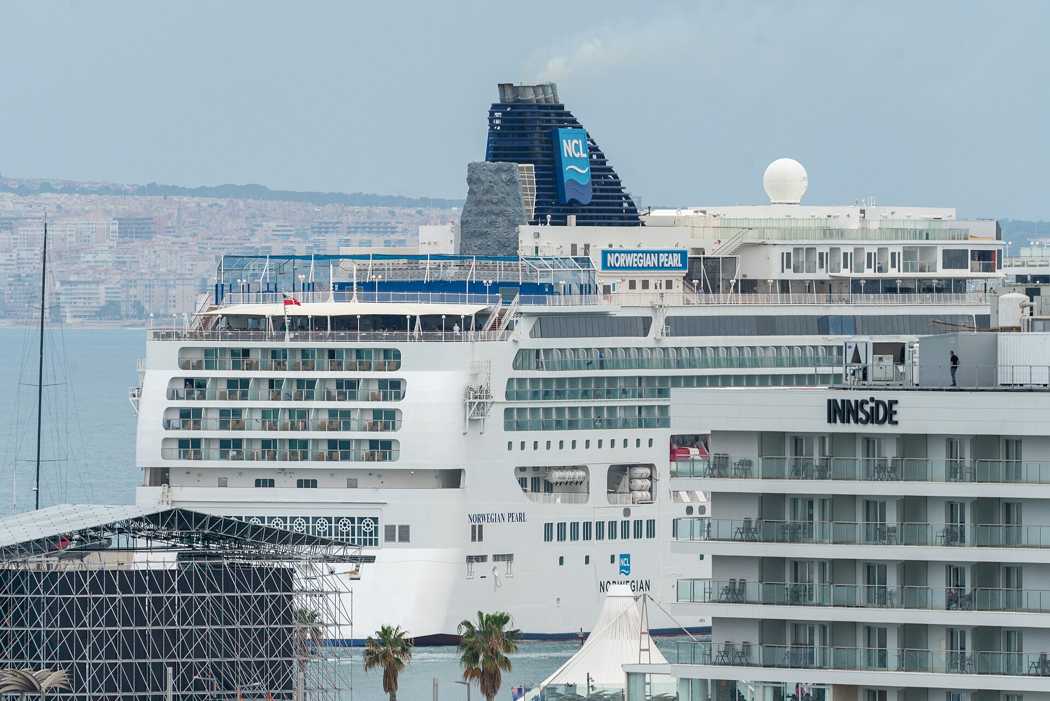
A modern cruise ship carries a floating town — thousands of guests and crew whose safety and footprint the crew manages together.
A large cruise ship carries several thousand guests and over a thousand crew — a small town that must generate its own power, make its own water, manage its own waste, and evacuate itself if the worst happens. On a cruise ship there is no such thing as "not my department" in safety. The waiter, the cabin steward, the entertainer, and the engineer all hold assigned emergency duties, and every one of them matters.
Passengers are not seafarers. They do not know the ship, they may not speak the working language, some are elderly, some are children, and many will be frightened in an emergency. International rules require passenger muster — a safety briefing and drill — shortly after departure, and crew assigned to passenger duties must be trained in crowd management under STCW: how to give calm, clear instructions; how to keep stairways and muster routes flowing; how to help passengers with reduced mobility; and how to account for everyone at the muster station.
Practise the skills in every drill: use the phrases you would use for real, in a voice that carries calm authority. Know your assigned stairways, assembly stations, and lifeboat or liferaft allocations. Know how to check cabins and public spaces systematically and report them clear. In a real emergency, passengers will do what crew tell them — if crew sound like they know. Drills are where that confidence is built.
On a cruise ship, the hotel department produces most of the daily environmental footprint, and manages most of it too:
- Food waste: buffets can waste heavily. Careful forecasting, correct storage, smaller batch preparation, and honest waste recording cut both cost and pollution. Food waste discharged at sea follows the same MARPOL distance rules as any ship — and good ships land more and discharge less than the rules demand. - Single-use plastics: cups, cutlery, straws, and packaging multiply by thousands of guests. Follow the ship's reduction programme, offer the reusable option first, and never let plastic reach the sea — not from a balcony, not from a pool deck bin in a gale. - Greywater and laundry: thousands of showers and a floating laundry produce large greywater volumes. Use detergents and chemicals exactly as dosed; never pour concentrated chemicals into drains; report laundry and galley drain faults early, before they become discharges. - Cabin and public-area waste: segregation at source — guest-facing bins work only if crew servicing them keep the streams separate and teach guests by example.
Cruise ships call at the most beautiful and most protected waters on earth — and those waters carry the strictest rules. Many cruise regions are MARPOL special areas with tighter discharge limits; some ports and states ban certain discharges entirely, restrict scrubber washwater, or require shore power where it is available. Alaska, the Baltic, the Caribbean, Norwegian fjords, and Antarctic and Arctic waters each carry their own regimes. The working rule for every crew member is simple: the local rule is the rule. When in port or in protected waters, assume nothing may be discharged unless the plan and the officer responsible confirm it.
Guests ask questions: "Where does the ship's rubbish go?" "Is the ship polluting this beautiful place?" "What fuel do you burn?" Never invent, never recite a lie, and never be defensive. Honest answers, at the level of your knowledge, sound like this: "Our garbage is separated on board; plastics and most waste go ashore to port facilities — nothing plastic ever goes into the sea." "We treat our wastewater in an on-board plant before any discharge, and in many ports we discharge nothing at all." "The industry is working on cleaner fuels; this ship does X" — where X is only what you actually know about your own ship. If a question goes beyond your knowledge, say so and offer to find out. Guests respect honesty; they can smell a script. And a crew that answers honestly ashore keeps itself honest afloat.
A ship burns fuel every minute of every day, so small efficiencies multiply across thousands of hours and hundreds of ships. Green seamanship is not a campaign or a poster; it is the daily craft of moving the same cargo, the same guests, the same distance, on less fuel and with less waste — without ever trading safety or machinery health for a fuel figure. This chapter lists what each department actually controls.
Fuel consumption rises steeply with speed — roughly with the cube of speed, so a modest speed reduction saves a large share of fuel on the passage. Slow steaming is the single most powerful operational measure a fleet has, and it also reduces underwater noise and the risk of fatal whale strikes. On board, the bridge team's craft is to steam at the ordered, efficient speed steadily rather than racing and waiting: arrive just in time, use weather routeing to avoid burning fuel fighting head seas, and plan arrivals so the ship does not sprint to an anchorage and sit. When port congestion data allows just-in-time arrival, everyone wins — fuel, emissions, and crew rest alike.
A ship floating at its optimum trim moves through the water with least resistance; the bridge and cargo teams control this through loading and ballast. A fouled hull and propeller — slime, weed, barnacles — can add a heavy fuel penalty, like driving with the handbrake on. Deck and engineering together protect the hull: keep coatings in good condition, report damage, arrange hull and propeller cleaning when the plan calls for it, and never let "we will save fuel next month" justify sailing dirty this month. Draft marks read honestly and cargo declared accurately are part of efficiency as much as of safety.
- Machinery kept in tune: injectors, turbochargers, coolers, and filters maintained so combustion stays clean and efficient - Leaks hunted down: steam, air, water, and oil leaks are fuel and money dripping away — a leak-reporting culture in the engine room pays for itself - Auxiliary engines and boilers loaded sensibly, not run half-empty in parallel out of habit - Heat recovered where the plant allows: economisers and waste-heat systems used and maintained, not bypassed - Reefer containers, pumps, and ventilation run to need, not to maximum by default
- Efficient routeing: weather, currents, and traffic used for the ship, not against it - Steady speed discipline and early, small alterations instead of late, large ones - Cargo and ballast planning that achieves good trim without extra ballast movements - Deck machinery, cranes, and mooring equipment operated and shut down thoughtfully — idling hydraulics burn fuel too - Reporting fouling, damage, and vibration early, while the fix is still cheap
On every ship, and hugely on cruise ships, the domestic load is real energy: galleys, laundries, air conditioning, lighting, and hot water. Switch off what is not in use, run full laundry loads, keep cold-store doors closed and seals sound, report dripping taps and steam leaks, and let air conditioning be set to comfort rather than to cold. Waste segregation done right (Chapter 4) is also energy sense: separated waste can be recycled or processed ashore; mixed waste is a cost and a burden everywhere it goes.
When a ship plugs into shore electricity in port and shuts down its auxiliary engines, the practice is called cold ironing or shore power. The port air clears immediately — no exhaust at the berth — and in regions where the grid is clean, total emissions fall too. More ports are fitting shore power, and some regions already require certain ships, especially cruise ships, to use it. The connection and disconnection are electrical operations with real hazards; follow the ship's procedures and the port's instructions exactly, and never treat the cable work as routine labour for untrained hands.
Green seamanship, in one sentence: know what your watch controls, control it well, and hand over honestly. Fuel saved by seamanship is money saved, emissions avoided, and machinery preserved — the rare decision where the company's interest, the climate's interest, and the seafarer's craft all point the same way.
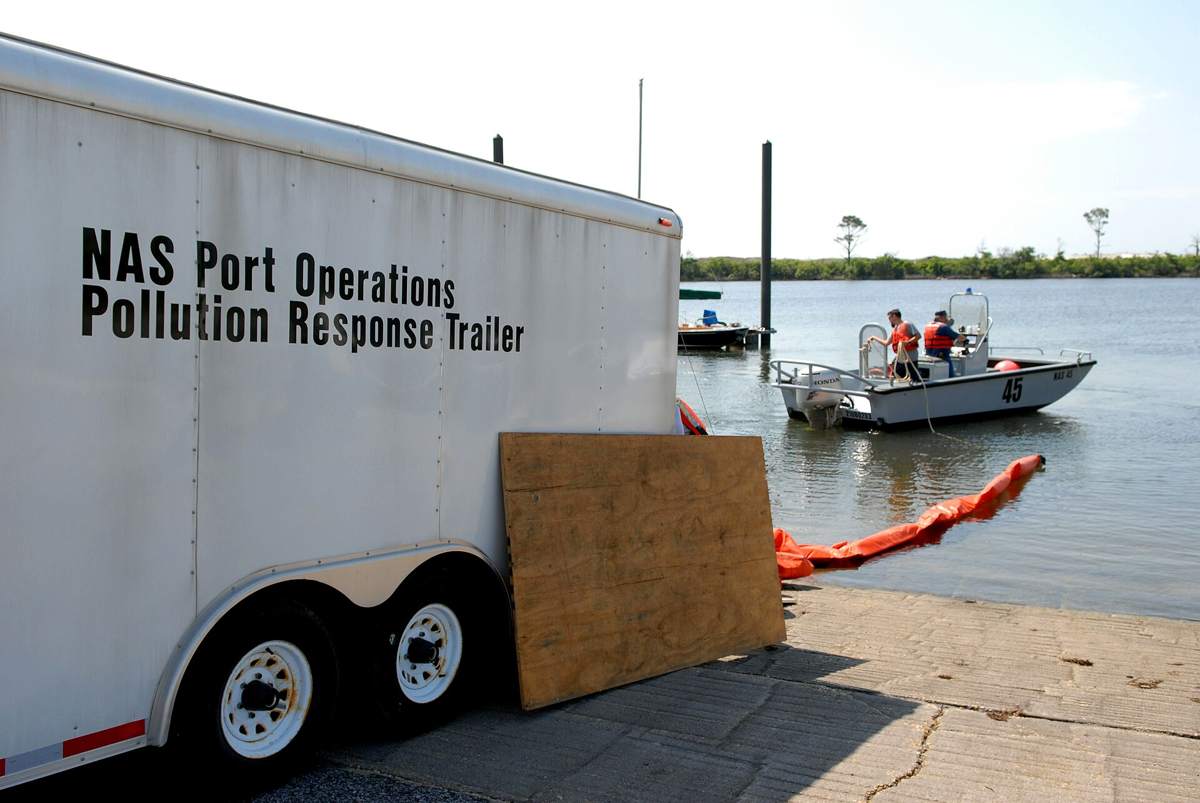
Responders deploy a boom to contain spilled oil. Containment in the first hours decides how much harm reaches the coast.
Incidents at sea — a spill, a fire, a collision, a man overboard, a serious injury — are rarely decided by the mistake that started them. They are decided by the first hour that follows. Crews that act in the right order, communicate honestly, and call for help early turn emergencies into reports. Crews that hide, delay, or improvise in the wrong order turn reports into inquiries. This chapter gives the order.
Nothing on board — no cargo, no schedule, no pollution figure — outranks a human life. In any incident, first make sure people are safe: raise the alarm, account for your team, keep clear of the hazard yourself, and get medical help moving for anyone hurt. Oil can be cleaned; a lost shipmate cannot be brought back. If the choice is ever between stopping pollution and protecting a person, protect the person, and let the plan and the responders handle the oil.
For a spill, the sequence is: stop the flow first — shut the pump, close the valve, isolate the line — because containing a spill that is still growing is hopeless. Then contain what has escaped: plug scuppers, deploy absorbent material and booms from the SOPEP kit, protect sea suctions and sensitive areas as the plan directs, and keep the oil on deck or close alongside where it can still be recovered. On deck, speed and the right material matter; ashore, the same principle scales up, as responders boom off beaches and harbours in the first hours.
Inform the master immediately — minutes matter, and the master cannot manage what the master does not know. Beyond the ship, the notification chain runs through the master and the company: coastal state authorities, the flag state, the port, the company's designated person ashore, and response resources, as the SOPEP and the SMS require and MARPOL demands. Early external notification brings tugs, booms, aircraft, and expertise while they can still change the outcome. Late notification — caused by fear, pride, or hope that the problem will quietly disappear — is the single most repeated failure in incident reports.
Now the hardest and most important part. When something goes wrong, a temptation appears: to adjust the record, soften the log, "correct" the Oil Record Book, or agree on a story simpler than the truth. Understand clearly what that temptation costs. Falsifying the Oil Record Book is a serious crime in many jurisdictions. Investigations compare records against samples, soundings, satellite images, and the memories of a whole crew. Seafarers have lost their certificates, their freedom, and their livelihoods over falsified entries; companies have paid ruinous fines and lost their right to trade. Careers and companies die on this — not on the original accident, but on the lie told afterwards.
The truth, by contrast, is survivable. Honest records, prompt reporting, and a crew that cooperates with investigators are treated entirely differently by courts, companies, and port states. If you are ever pressured — by anyone, of any rank — to falsify a record or hide an incident, refuse, and report the pressure through the company's designated person or the flag state channels your SMS describes. Document what you saw and did, factually and at the time. Your logbook honesty is your professional honour, and no employer who asks you to surrender it is protecting you.
After the incident, good companies investigate to learn, not to hang someone. Take part honestly: what happened, what the conditions were, what would have made the safe action easier. The goal is that the next crew, on the next ship, does not face the same trap. A just culture distinguishes honest error — met with training and better systems — from recklessness and dishonesty, which are met with consequences. If your ship debriefs incidents openly, it is a ship that is getting safer. If incidents are buried, the same accident is already on its way back.
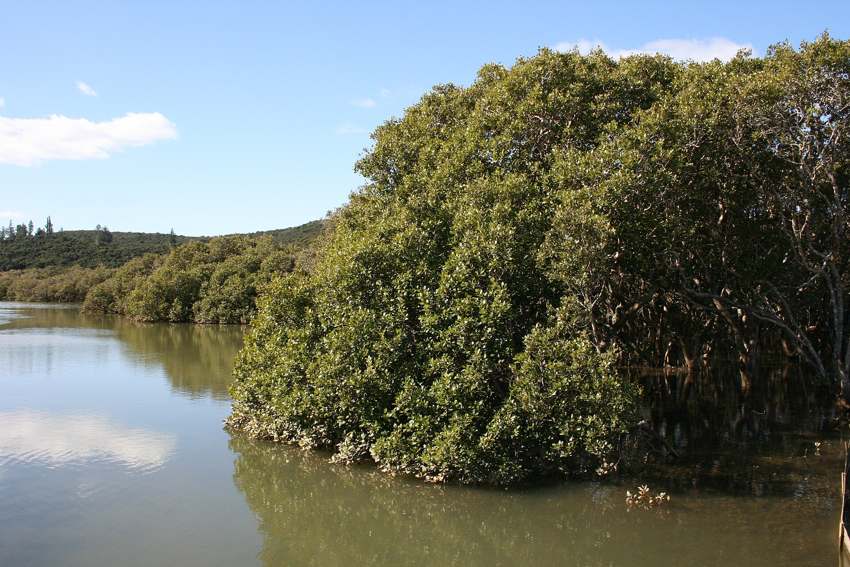
Mangrove coasts protect villages from storms and shelter young fish. What a ship discharges at sea can end up here.
Take these checklists into your daily routine. Print them, discuss them at toolbox meetings, and hold yourself to them.
Bridge team: - Passage plan checked against the latest weather, warnings, and routeing advice — and updated when the weather changes its mind - Efficient speed maintained steadily; arrivals planned to avoid racing and waiting - Rest hours protected and recorded honestly for every watchkeeper - Master informed early of every doubt: traffic, weather, machinery, or crew
Deck team: - Scuppers, drip trays, and spill kit checked before every bunkering, transfer, or cargo operation - Garbage segregated at the bin; plastic never over the side, ever - Lashings, watertight closures, and securing for sea verified before departure and before heavy weather - Permits in place for hot work, aloft work, and enclosed spaces — and the stop-work word used without hesitation
Engine team: - Bilges clean, separators and monitoring equipment operated and maintained as designed — never bypassed - Transfers and bunkering run to the checklist, with tanks sounded and communications tested - Leaks reported and repaired, not wiped and forgotten - Oil Record Book entries written truthfully, every time, without exception
Galley and hotel team: - Food prepared in quantities that match real need; waste recorded honestly - Cooking oil collected for shore disposal — never into sinks, drains, or bilges - Chemicals dosed correctly; greywater rules for the port and area followed exactly - Guest questions about the environment answered honestly, or referred to someone who knows
- I will learn my ship's SOPEP, my muster duties, and my escape routes on the day I join — not the week after - I will stop any job that is about to hurt a person or pollute the sea, and I will back any shipmate who does the same - I will never falsify a record — not the Oil Record Book, not rest hours, not a log — for anyone, at any rank - I will treat every coast as somebody's home coast - I will protect my rest and my shipmates' rest, because tired crews make the accidents that rested crews prevent - I will speak up early — about defects, doubts, near misses, and pressure — while speaking up can still change the outcome - I will keep learning: my certificates, my drills, and my craft are how I honour the sea that employs me
Seafaring is a licensed profession, and the licences live on training. STCW requires periodic refresher training — in personal survival, fire prevention and firefighting, and other competencies — because skills fade and equipment changes. Treat refreshers as professional maintenance, not as an obstacle between contracts. Beyond the required courses, the climate era adds new skills each year: new fuels and their hazards, ballast and scrubber systems, energy-efficiency operation, and digital reporting. The seafarer who keeps learning stays employable, stays promotable, and stays safe.
Every seafarer knows the truth in his bones: the sea feeds the sailor's family. It carries the cargo that pays the wages, it fills the nets of the coastal villages our families come from, and it gives the world its weather, much of its food, and half its oxygen. Protecting it is not a hobby added to the profession. Protecting it is part of the profession — as much a part as the lookout's eye, the engineer's ear, and the master's judgement.
You now hold the whole picture: how the sea is changing, how your ship touches the climate and the coast, how spills are prevented and incidents survived, and how an honest crew works. None of it asks for heroes. It asks for professionals — ordinary men and women who follow the checklist, speak up early, rest properly, record honestly, and go home safe to the families waiting for them. Sail safe. Keep the sea clean. And may every contract end the way it should: with the ship in good order, the crew unharmed, and the ocean no worse for your passing.
- Container ship OOCL Dalian: photo by Bernard Spragg, CC0 1.0, via Wikimedia Commons - Crude oil tanker Maria A. Angelicouss leaving Rotterdam: photo by Alfvanbeem, CC0 1.0, via Wikimedia Commons - Inside an enclosed lifeboat (Kiribati Chief): photo by Rob Freijs, CC BY-SA 3.0, via Wikimedia Commons - Cruise ship Norwegian Pearl at Alicante: © Paul Colin Hennig / firstdorsal.eu / CC BY-SA 4.0, via Wikimedia Commons - Oil containment boom being deployed at Sherman Cove: U.S. Navy photo, public domain, via Wikimedia Commons - Mangroves at Waipatiki Creek, New Zealand: photo by Kahuroa, public domain, via Wikimedia Commons - Cover artwork: created for the AstolixGen Learning Series