An oil slick is the film on your tea, at the scale of an ocean. What a slick is, and how satellites track one, is explained in our 24 October post on the UAE spill. When people ask how we reduce oil slick pollution, the answer has two parts: how we clean up a spill after it happens, and how we stop spills from happening in the first place. The October 2026 spill off the UAE coast, which closed beaches in three emirates, showed both parts in the same week.
The first response is always containment. Floating barriers called booms are placed around the slick to keep the oil together and stop it reaching beaches, mangroves and desalination intakes. Once the oil is held in one place, skimmer vessels and machines scoop it off the surface. Skimmers work best in calm water, and the recovered oil can be taken away for processing. In the recent UAE response, responders deployed floating booms and skimmer vessels for exactly this reason: while the oil is still together, it can still be collected. Once it spreads and breaks up, collection becomes far harder.
Two more tools work on the oil itself. Sorbents are materials that soak up oil, such as pads, rolls and loose fibres, and they are best for small spills and for picking up the final traces after skimming. Dispersants are chemicals sprayed onto the slick that break the oil into tiny droplets, so that naturally occurring microbes can digest them more easily. Dispersants need official approval, because the trade-off is real: experts warn that some dispersant chemicals can harm corals, fish, crustaceans and plankton. They are used only where the benefit of removing surface oil outweighs the harm of pushing it into the water.
Two further methods are used in special conditions. Controlled in-situ burning sets fire to the oil on the surface in calm conditions, far from shore and with approval. It can remove large amounts of oil quickly, but it creates smoke and air pollution, so it is never a first choice near people. Bioremediation works the other way: it relies on nature's own oil-eating microbes, sometimes helped by adding nutrients. It is the slowest and gentlest method, and it works best on light, weathered oil after the main cleanup is done.
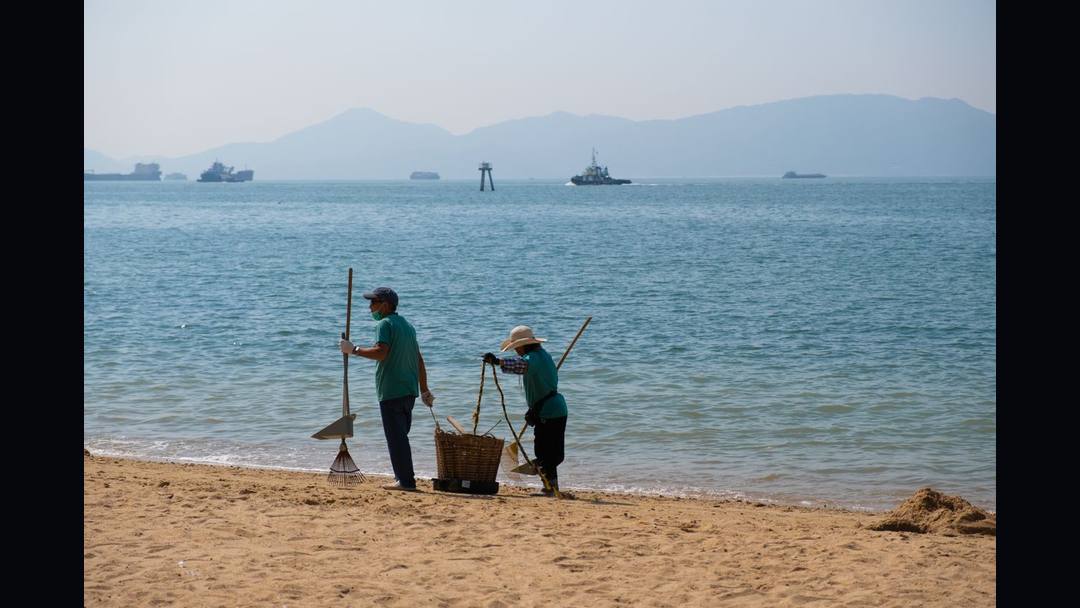
When oil reaches the shore, the work becomes manual. Crews in protective suits shovel oiled sand, vacuum trucks suck up pooled oil, and workers wash rocks by hand. Wildlife rescue teams wash oiled birds and animals, one by one. It is slow, labour-heavy work, and it is the only option once oil is on a beach. No machine can clean a mangrove forest or a rocky shore the way careful hands can, which is why shoreline cleanup often takes weeks after the sea itself looks clear.
No single method removes all the oil, and what works best depends on the conditions. Speed matters most, because oil spreads, thins and weathers with every passing hour. In calm seas, booms and skimmers do the most good. In rough seas, where booms fail, dispersants or burning may be considered. Near the shore, the priority is protecting beaches, mangroves and water intakes before the oil arrives. In practice, responders use several methods together, and even then a part of the oil always escapes: some evaporates, some sinks, and some stays in the mud.
That is why the biggest reduction in oil slick pollution has come from prevention, not cleanup. After the wrecks of the Erika in 1999 and the Prestige in 2002, the phase-out of single-hull tankers was accelerated and the double hull, which shields the cargo when a ship is damaged, became the norm. The MARPOL convention sets rules for how ships are built and run, ports inspect vessels, and crews are trained for spills. Early detection from satellites and aircraft also matters, because a response that starts in hours saves far more than one that starts in days. The result is measurable: according to ITOPF, the international tanker owners' pollution federation, oil spilled by tankers fell from 1.13 million tonnes in the 1990s to about 42,000 tonnes across 2020 to 2025, a decline of more than sixteenfold.
Ordinary people have a part in this too. If you see a slick or an oily sheen on the water, report it to the local authorities immediately and do not wait for someone else to notice. Never touch spilled oil with bare hands, because it is toxic. Volunteer for a cleanup only with training and protective gear, and never wash oiled animals yourself unless a rescue team guides you. Protect the mangroves near your coast, because they are nurseries for fish and a natural barrier for the shore. Fishermen can help most of all by reporting sheens while they are still at sea, when a fast response is still possible.
AstolixGen follows the sea-pollution field closely, and our own AI, automation and IoT work in this area is still at pilot and concept stage, not a deployed cleanup system. We say that plainly, because the lesson of every spill is the same: the sea cannot be protected by announcements. It is protected by double hulls that hold, crews that are trained, satellites and aircraft that spot trouble early, and response teams that arrive in hours. And the honest caveat stands: even the best cleanup leaves traces behind. Some oil sinks, some persists in mud for years, and some harm cannot be undone. That is why prevention, plus a fast response, will always beat any cleanup tool on its own.