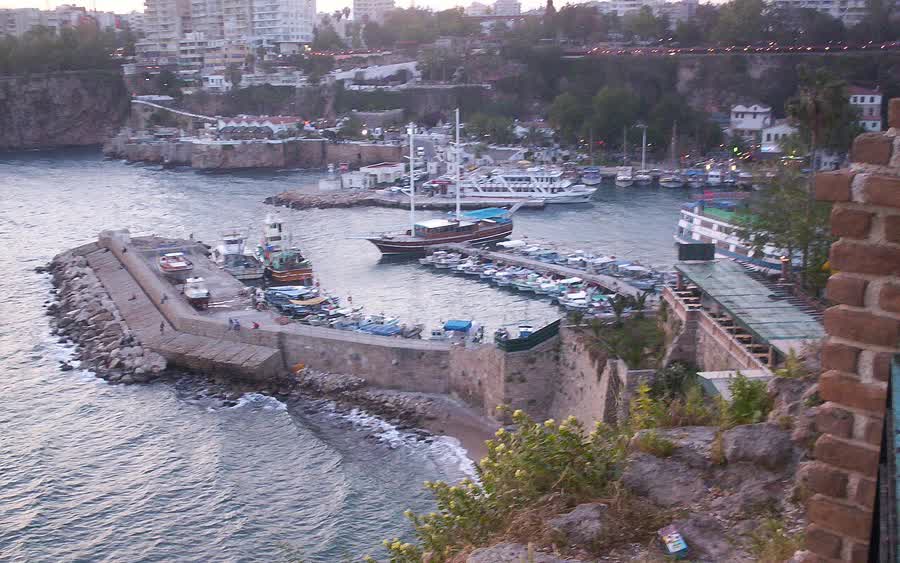
In eleven days, the world's biggest climate conference opens on a Mediterranean shore — and for the first time, the ocean is not a side event. COP31, the 31st Conference of the Parties to the UN climate convention, runs from 9 to 20 November 2026 in Antalya, Türkiye. Many want it remembered as the “Blue COP”: the conference where the ocean moved to the centre of climate policy.
1. What a “Blue COP” actually means
“Blue COP” is a campaign label, not an official UN title, and the distinction matters because the label carries a demand. In June 2026, more than 150 experts, institutions and governments signed an open letter coordinated by the World Resources Institute, addressed to COP31 hosts Türkiye and Australia, Brazil as COP30 President, and the Pacific Islands Forum Secretariat. Their ask: give ocean-climate action a permanent place in global climate governance, so ocean issues are “never sidelined again.”
The letter's case rests on the ocean's role as a climate buffer: it absorbs over 90 percent of excess heat trapped by greenhouse gases and captures around a quarter of global carbon dioxide emissions, while sustaining billions of people. Its sharper point is the gap: ocean solutions, the signatories argue, remain “vastly underrepresented” in climate policy and finance — even though scaling them up could provide up to 35 percent of the emissions cuts needed to keep warming below 1.5 degrees. Treat that 35 percent as the signatories' argument, not a measured result.
2. Why this year, and why Antalya
COP31's unusual shape explains the timing. For the first time, the presidency is shared under a partnership agreed at COP30: Türkiye holds the presidency and hosts the conference, while Australia, through climate minister Chris Bowen, serves as President of Negotiations. The Pacific hosted the pre-COP meeting in Nadi, Fiji, with a leaders' segment in Tuvalu, from 5 to 8 October — putting small island states at the front of the queue. The hosts call it a “COP of Implementation”; Ocean and Seas is one of ten priority themes, with a dedicated day on 17 November.
At COP30, the ocean was an Action Agenda pillar and a High-Level Ocean Ministerial was held for the first time. The letter asks COP31 to go further: make ocean solutions a core theme of the 11–12 November Leaders' Summit, host another Ocean Ministerial, and put ocean priorities into the texts on mitigation, adaptation and finance. Two asks matter most: appoint Ocean Focal Points inside the Mitigation Work Programme, the Adaptation Committee and the Standing Committee on Finance, with representatives from Small Island Developing States; and dedicate a session to that committee's forum on financing climate action in water systems and the ocean.
3. From recognition to finance: the gap COP31 must close
If COP31 has a single test, it is money. The Ocean Risk and Resilience Action Alliance (ORRAA) states the mismatch: more than 90 percent of island and coastal countries included at least one ocean measure in their latest national climate plans — Nationally Determined Contributions, or NDCs — yet over 60 percent are conditional on further technical or financial support. And less than 1 percent of climate and development finance reaches ocean and coastal solutions. The plans largely exist; the funding pipelines mostly do not.
Two COP30 launches are due to move from promise to practice in Antalya. The Blue NDC Challenge, launched by France and Brazil ahead of COP30, called on all countries to put ocean solutions into their climate plans; its Implementation Taskforce, announced at COP30, is to be launched at COP31. Alongside it sits the Blue Package, a roadmap for ocean solutions across five sectors — marine conservation, food, energy, transport and shipping, and tourism — with revisions expected by COP31. For this column, shipping matters: decarbonising global shipping is named in the WRI letter as one of the transformative ocean solutions, alongside offshore renewable energy, sustainable blue foods and blue-carbon ecosystems.
4. How to judge the outcome — and what it means far from Antalya
Negotiators will not be the only ocean voices in Antalya. The Ocean Pavilion, led by Woods Hole Oceanographic Institution and Scripps Institution of Oceanography, returns with the theme “Convergence” and more than 65 talks, keynotes and roundtables, and its partners back the Antalya Ocean Declaration. Judge COP31 by that chain: whether ocean language survives into negotiation texts, whether the Blue NDC Taskforce launches with real members and support, whether the Leaders' Summit declaration carries finance, and whether the ocean's share of climate finance starts to move from under 1 percent.
For readers in Karachi, COP31 is not about a distant sea. The same processes — warming water, rising seas, stressed fisheries — shape the Arabian Sea coast too, and the same financing gap decides whether coastal plans become real projects. This post makes no claim about local statistics that have not been verified; the point is structural. At AstolixGen, a small Karachi-based company, our contribution is awareness and education, not monitoring or regulation: our Marine Pollution guide explains what happens when oil meets the sea, and our free learning book, Maritime Climate Awareness, explains what a changing ocean means for seafarers and coastal families.
Sources: World Resources Institute open letter (10 June 2026); Plymouth Marine Laboratory news; National Oceanography Centre COP31 announcement; Ocean Risk and Resilience Action Alliance COP31 programme.