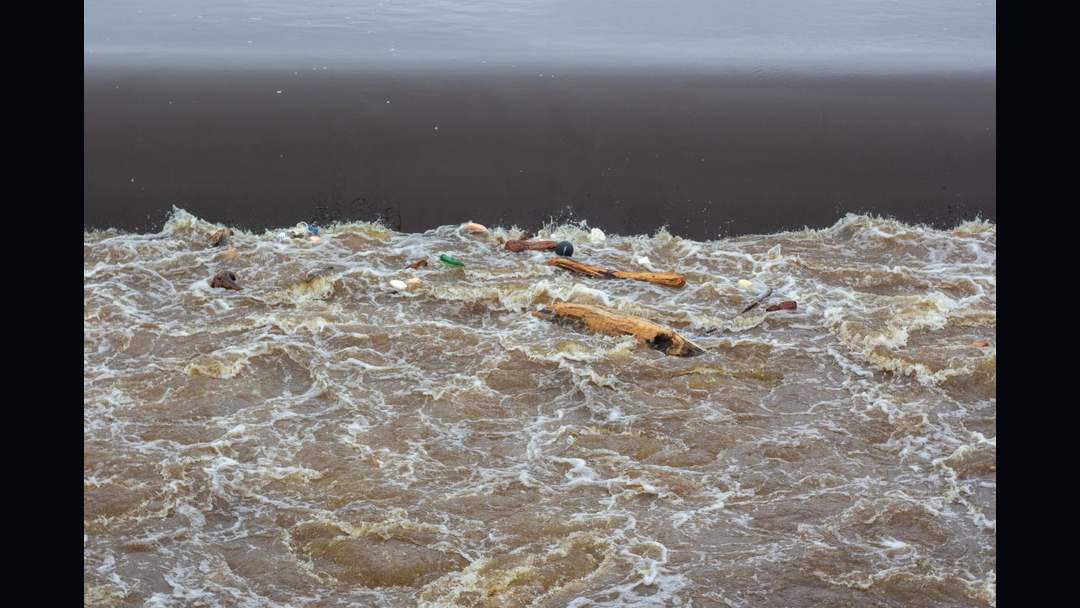
Footage from Santa Marta, Colombia, after heavy rain shows: the city's garbage moved with the river water and reached the sea, where garbage floated on the surface. No tanker was involved and no oil was spilled. The pollution came from the city itself, carried by rain and rivers to the ocean. It is a reminder that the sea does not only get polluted far offshore. Sometimes the pollution starts in our own streets.
The place is Santa Marta, a city on Colombia's Caribbean coast, and the river is the Manzanares. Heavy rain washed garbage from the area into the river, and the river carried it into the sea. Where the river water met the sea, it appeared completely black, and the garbage in it was clearly visible. Many parts of the beach became filled with floating garbage, and concern grew in Santa Marta city about rising pollution and the harm this polluted water could do to marine life and their natural habitats. The aerial footage shows a wide, dark, debris-filled stream flowing across the sand into greenish sea water.
The same rainy week brought wider flooding to Colombia's Caribbean coast. News reports described streets flooded in Santa Marta, Cartagena and Barranquilla in late October 2026, with rivers overflowing and a red alert in Santa Marta. Rain on this scale does two kinds of damage at once: it floods homes and streets, and it flushes the city's uncollected waste into the water system. When drains are blocked by garbage, the flooding gets worse too, because the water has nowhere to go.
Why does floating garbage matter so much once it reaches the sea? Plastic bottles and bags break into smaller and smaller pieces, and fish, turtles and seabirds can swallow them or get tangled in them. Foam and containers wash onto beaches and into mangroves, where they smother the plants and animals that live there. Fishing communities suffer twice: their catch is spoiled and their beaches, which visitors come to see, are covered in waste. And garbage in water is not clean: it carries bacteria and chemicals, so a beach covered in trash is also a health risk for the people who live nearby.
Researchers call this the source-to-sea problem. A large share of the plastic found in the ocean does not start at sea at all. It starts on land, in cities and towns, and rivers are the road it travels on. That is why a flood of garbage in a river is not a small local mess. It is the beginning of ocean pollution. Every bottle that a river carries to the sea becomes part of a problem that no single beach cleanup can finish, because the supply keeps coming from upstream.
So how is this kind of pollution reduced? First, at the source: regular waste collection that works before the rain comes, bins that do not overflow, and no dumping into streams and drains. Second, in the river: floating barriers and nets that catch waste before it reaches the sea, and cleanup crews on rafts and boats that collect what the water brings. Third, at the coast: municipalities and volunteers cleaning beaches, and storm drains fitted with traps that catch trash. None of these works alone. Collection without river barriers still lets waste escape, and beach cleanups without collection mean the same beach fills up again after the next rain.
Ordinary people have a real part in this. Do not throw waste into streams, drains or empty plots, especially before rain. Keep the drain outside your home clear. Separate plastic bottles and bags so they can be collected instead of washed away. If your area has a cleanup drive, join it with gloves and a bag, and teach children that a stream is not a dustbin. Fishermen and people who live near the coast can report garbage washing up, because an early report means an early cleanup. Karachi faces the same pattern when monsoon rain washes garbage through its nullahs to the sea, so this is not only Colombia's story. It is the story of every coastal city where waste and rain meet.
AstolixGen follows the sea-pollution field closely, and our own AI, automation and IoT work in this area is still at pilot and concept stage, not a deployed cleanup system. We say that plainly because the lesson of this story is about honesty: the sea cannot be protected by announcements. It is protected by collection trucks that come on time, drains that are kept clear, and rivers that are watched before the waste reaches the ocean.
The honest caveat is that cleaning the sea's surface never solves this problem by itself. As long as waste keeps entering streams, every cleanup is only a pause. The real reduction happens upstream, on land, in how a city collects its garbage and how its people treat their rivers. Rain will keep coming. The question is whether it carries clean water to the sea, or the city's garbage.
References: see the linked news reports below for the rainfall, the Santa Marta red alert, the Manzanares river warnings and garbage reaching the beaches. Photos: Pexels (free to use). The featured photo shows a polluted river carrying trash and debris and is an illustration of the problem, not a photo of the Colombia event itself.